Table of Contents

Watch Today's Dispatch

Pollution

📅 Last updated: December 09, 2025 2 min read

🌫️ Why in News?

  • Delhi-NCR witnessed an extreme pollution spike with AQI values hitting 450–900 in several hotspots including Anand Vihar, Jahangirpuri, Bawana and RK Puram.
  • The Air Quality Index entered “Severe+” (Emergency) category for multiple days in a row, forcing closure of schools, construction bans, and emergency curbs under GRAP-IV.
  • Mass complaints poured in from citizens as dense smog reduced visibility, disrupted flights, and triggered sharp increases in respiratory cases.
  • Citizen groups and students held protests across Delhi demanding accountability from state governments, Centre, and pollution control agencies.
  • The Supreme Court pulled up Punjab, Haryana, and Delhi for failing to check stubble-burning spikes that contributed up to 30–40% of PM2.5 during the smog episode.
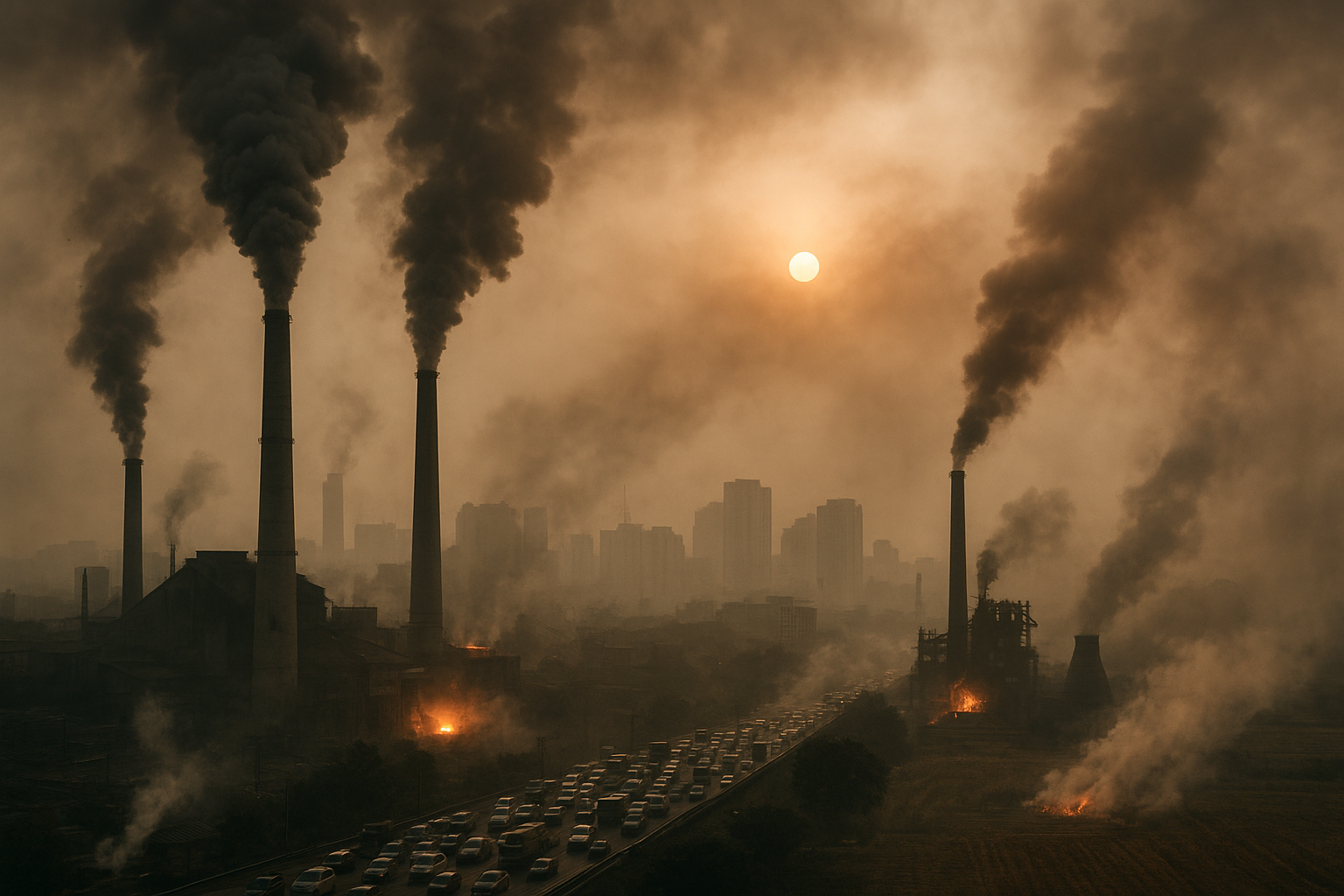
🌫️ Severity of Air Pollution in India

  • 1.4 billion exposed: Almost the entire population inhales air far above WHO safety norms.
  • PM2.5 hotspots: India features many of the world’s most polluted cities, especially across the Indo-Gangetic region.
  • Urban–rural burden: Cities choke on vehicles and industry, villages on chulha smoke and biomass burning.
  • Winter smog waves: Temperature inversion, stubble burning, and stagnant winds trap pollutants in North India.
  • Health toll rising: About 1.67 million deaths (2019) linked to polluted air and related diseases.
  • Economic damage: Loss of nearly $36.8 billion in productivity, healthcare load, and reduced efficiency.

🔥 Major Causes of Air Pollution

  • Fossil fuel combustion: Coal plants, DG sets, and industrial furnaces emit PM, SO₂, and NOx.
  • Vehicular emissions: Congestion, ageing fleets, and diesel reliance intensify urban pollution.
  • Biomass burning: Firewood, dung cakes, and crop residues dominate rural household energy use.
  • Industrial discharge: Brick kilns, cement, steel, and chemicals often bypass emission control norms.
  • Construction dust: Road dust and unregulated construction elevate PM10 in metro regions.
  • Stubble burning: Seasonal residue burning peaks in October–November across Punjab–Haryana.
  • Landfill & waste fires: Open burning releases methane, VOCs, and toxic dioxins.

☠️ Health & Environmental Impacts

  • Respiratory burden: Asthma, COPD, bronchitis, and reduced lung capacity, especially in children.
  • Cardiac risks: Higher chances of stroke, hypertension, and heart disease.
  • Child–maternal harm: Low birth weight and impaired cognitive growth.
  • Climate disruption: Black carbon accelerates glacier melt; tropospheric ozone reduces crop yields.
  • Solar losses: Panel efficiency may drop by 2.3 percent due to atmospheric dust and haze.
  • Visibility reduction: Thick smog hampers transport and worsens winter air stagnation.

🏛️ Government Policies & Current Measures

  • National Clean Air Programme: Targets 40 percent PM reduction across 132 non-attainment cities.
  • CAQM framework: NCR-focused coordination for stubble control and industrial compliance.
  • BS-VI norms: Cleaner fuel and strict vehicular emission standards nationwide.
  • Ujjwala scheme: Boosting LPG adoption to curb household smoke.
  • SAFAR system: Integrated air quality forecasting for major Indian cities.
  • Renewable energy push: Expanding solar and wind installations to cut fossil dependence.
  • Solid waste rules: Single-use plastic bans and tighter landfill regulations.

🧩 Key Challenges in Addressing Air Pollution

  • Fragmented governance: Ministries work in silos without unified planning.
  • City-only focus: Policies ignore large regional airsheds where pollutants travel across borders.
  • Weak enforcement: Industries and construction often evade emission standards.
  • Data limitations: Sparse sensors and outdated emission inventories.
  • Underused funds: Many NCAP cities spend only a fraction of allocated budgets.
  • Behavioural inertia: Slow uptake of clean cooking, carpooling, and public transit.
  • Short-term fixes: Odd–Even, sprinklers, and smog towers offer minimal long-term benefit.

🔧 What Needs to Be Done

  • Airshed management: Coordinated action across states sharing pollution flows.
  • Source-based reduction: Shift from AQI targets to strict emission-reduction mandates.
  • Industrial upgrades: Cleaner technologies and continuous emissions monitoring.
  • Transport reforms: Electric buses, strong public transit, and walk-cycle infrastructure.
  • Crop residue solutions: Happy Seeder incentives, PUSA decomposer, and MSP-linked rewards.
  • Urban redesign: Dust-controlled construction and decentralised waste systems.
  • Transparent data: Real-time public emission disclosure to boost compliance.

📝 Conclusion

  • Air pollution in India is a multidimensional challenge rooted in energy, transport, agriculture, and governance structures.
  • Policies like NCAP and BS-VI help, but the scale of implementation is still insufficient for a population of this size.
  • Long-term structural reforms, scientific planning, and citizen participation are essential for cleaner air and healthier cities.