Should Hate Speech Be Criminalised in a Democracy?

News:
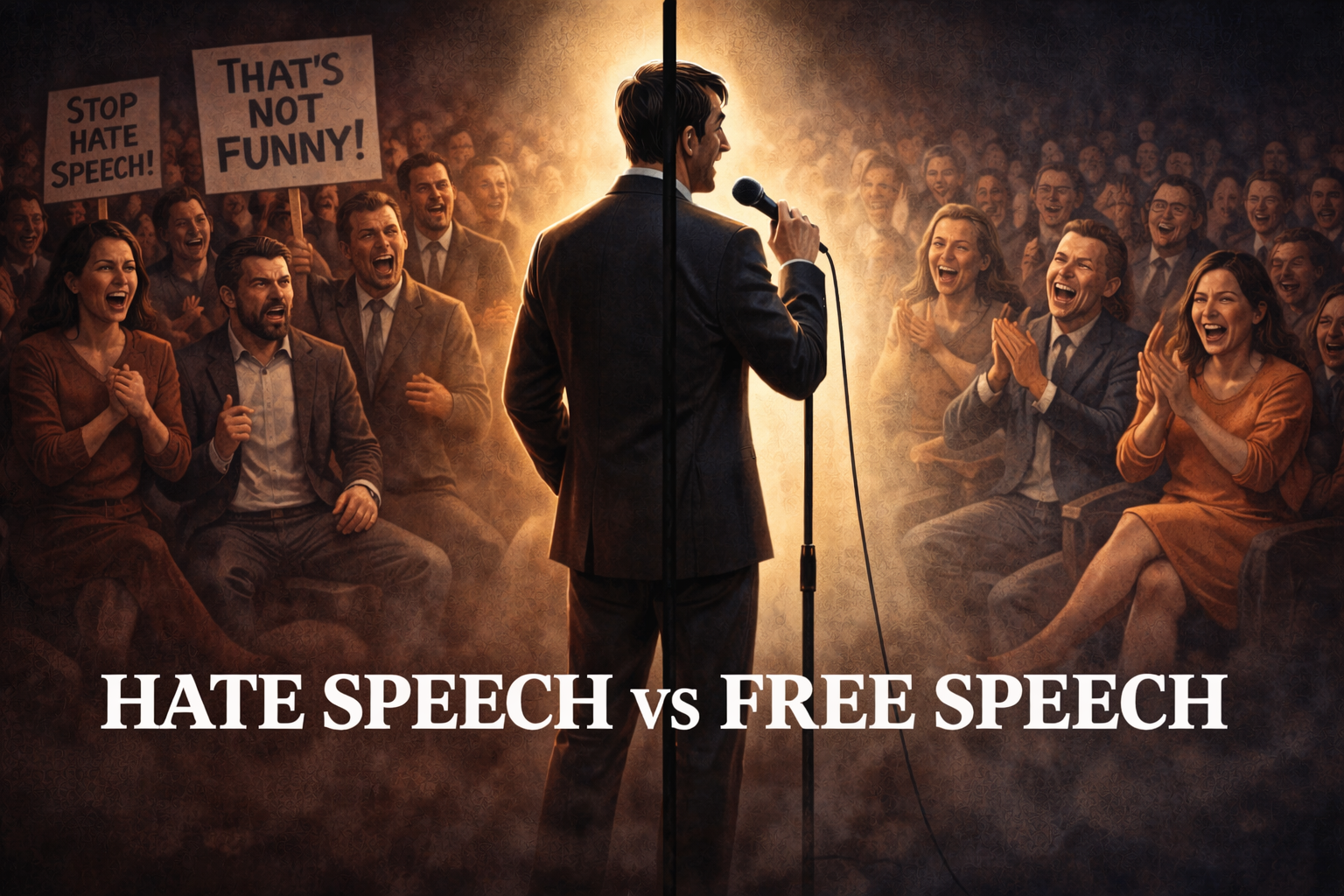
Recently, legal experts and policymakers renewed debate on strengthening India’s hate speech framework, following discussions around proposed state-level legislation such as the Karnataka Hate Speech and Hate Crimes (Prevention) Bill, raising concerns about balancing freedom of expression with protection of vulnerable communities.
Arguments in Favour of Strong Hate Speech Regulation
1. Protects Vulnerable Communities
Hate speech frequently targets communities already facing social or political marginalization. Legal restrictions can limit rhetoric that deepens discrimination, reinforces stereotypes, and encourages exclusion, helping ensure vulnerable groups participate safely and equally within democratic society.
- Example: Laws penalizing speeches attacking religious minorities discourage rhetoric that normalizes discrimination and triggers communal tensions.
2. Prevents Escalation into Violence
Hostile rhetoric can gradually normalize prejudice and create environments where discrimination and violence become socially acceptable. Early legal intervention against harmful speech can disrupt escalation and reduce the likelihood of hate crimes or collective violence.
- Example: Public speeches portraying migrants as threats can fuel hostility and increase risks of targeted harassment or attacks.
3. Maintains Social Harmony and Public Order
Diverse societies contain multiple cultural, linguistic, and religious identities. Inflammatory rhetoric directed against particular groups can destabilize community relations, making regulatory intervention necessary to preserve social harmony and prevent public disorder.
- Example: Authorities restricting provocative speeches during sensitive religious gatherings help prevent communal clashes and maintain public order.
4. Upholds Democratic Equality
Democracy depends on equal participation of all citizens. Hate speech can silence minorities by creating fear, humiliation, or exclusion, discouraging their engagement in political discussion, leadership, and representationwithin democratic institutions.
- Example: Persistent online harassment targeting women politicians discourages participation and reduces representation in political leadership positions.
5. Discourages Political Polarization
Divisive rhetoric is sometimes used strategically by political actors to mobilize supporters through identity-based hostility. Strong legal responses discourage leaders from exploiting communal tensions and promote responsible political discourse.
- Example: Electoral authorities penalizing candidates using communal rhetoric reduce incentives for campaigns based on fear and division.
6. Reinforces Accountability of Public Figures
Public leaders possess significant social influence. When they engage in inflammatory rhetoric, it can legitimize prejudice among followers. Legal accountability encourages responsible communication and discourages misuse of influence for divisive purposes.
- Example: Courts directing police to investigate inflammatory speeches by elected officials ensures accountability and discourages harmful rhetoric.
Arguments Against Strong Hate Speech Regulation
1. Risk of Curtailing Free Speech
Broad hate speech regulations may unintentionally suppress legitimate criticism, satire, or controversial viewpoints. Democracies rely on open debate, and restrictive laws risk limiting intellectual freedom, political dissent, and discussion of sensitive issues.
- Example: A writer criticizing religious practices could face accusations of hate speech despite engaging in legitimate cultural critique.
2. Ambiguity in Definition
Hate speech lacks precise definition because interpretation depends on context, perception, and cultural sensitivity. Vague legal standards create uncertainty, making enforcement inconsistent and increasing the risk of arbitrary legal action.
- Example: A comedian’s satirical remark may be seen as humor by some audiences but deeply offensive and disrespectful by others in sensitive social contexts.
3. Potential for Political Misuse
Governments may use hate speech laws selectively against critics, activists, or opposition leaders. Broad definitions can allow authorities to suppress dissenting voices by labeling critical speech as harmful or socially disruptive.
Example: Authorities prosecuting opposition speeches as hate speech discourage criticism and weaken democratic accountability.
4. Difficulty in Proving Intent
Determining whether a statement was intended to incite hatred or merely express opinion is inherently difficult. Speakers may claim satire, humor, or misunderstanding, complicating efforts to prove deliberate harmful intent.
- Example: A public figure accused of offensive remarks may argue statements were intended as dark humor during political speech or public entertainment events.
5. Chilling Effect on Public Debate
Fear of legal consequences may discourage discussion of complex or controversial social topics. This chilling effectweakens intellectual discourse and prevents societies from openly confronting sensitive cultural or political issues.
- Example: Journalists avoiding coverage of ethnic conflicts due to legal risks surrounding accusations of inflammatory reporting in politically sensitive environments.
6. Law Alone Cannot Change Social Attitudes
Legal penalties address extreme expressions but cannot eliminate deep-rooted prejudice or cultural bias. Long-term reduction of hate requires education, dialogue, and social reform that promote empathy and mutual understanding.
- Example: Anti-discrimination laws exist widely, yet informal prejudice persists without sustained education and cultural change.
Conclusion:
The debate over hate speech regulation reflects a fundamental tension between protecting freedom of expression and ensuring social equality and public safety. While legal restrictions can help prevent discrimination, hostility, and violence, overly broad regulations risk suppressing legitimate debate and criticism. Democracies must therefore pursue a carefully balanced approach, combining clear legal standards, institutional accountability, and social awareness to address harmful speech while preserving the open dialogue essential for democratic progress and pluralistic coexistence.