

Free Study Material
Why Choose Hemantra for Court Exams 2026?
Learn from Expert Faculty
Our experienced mentors simplify General Knowledge, Reasoning, and Legal/Judiciary awareness with practical, exam-oriented strategies.
Live Interactive Classes
Attend live online classes where you can ask questions and interact with faculty in real time.
Complete Study Material
Receive updated notes, PDFs, topic-wise practice questions, and revision material aligned with each court's latest syllabus.
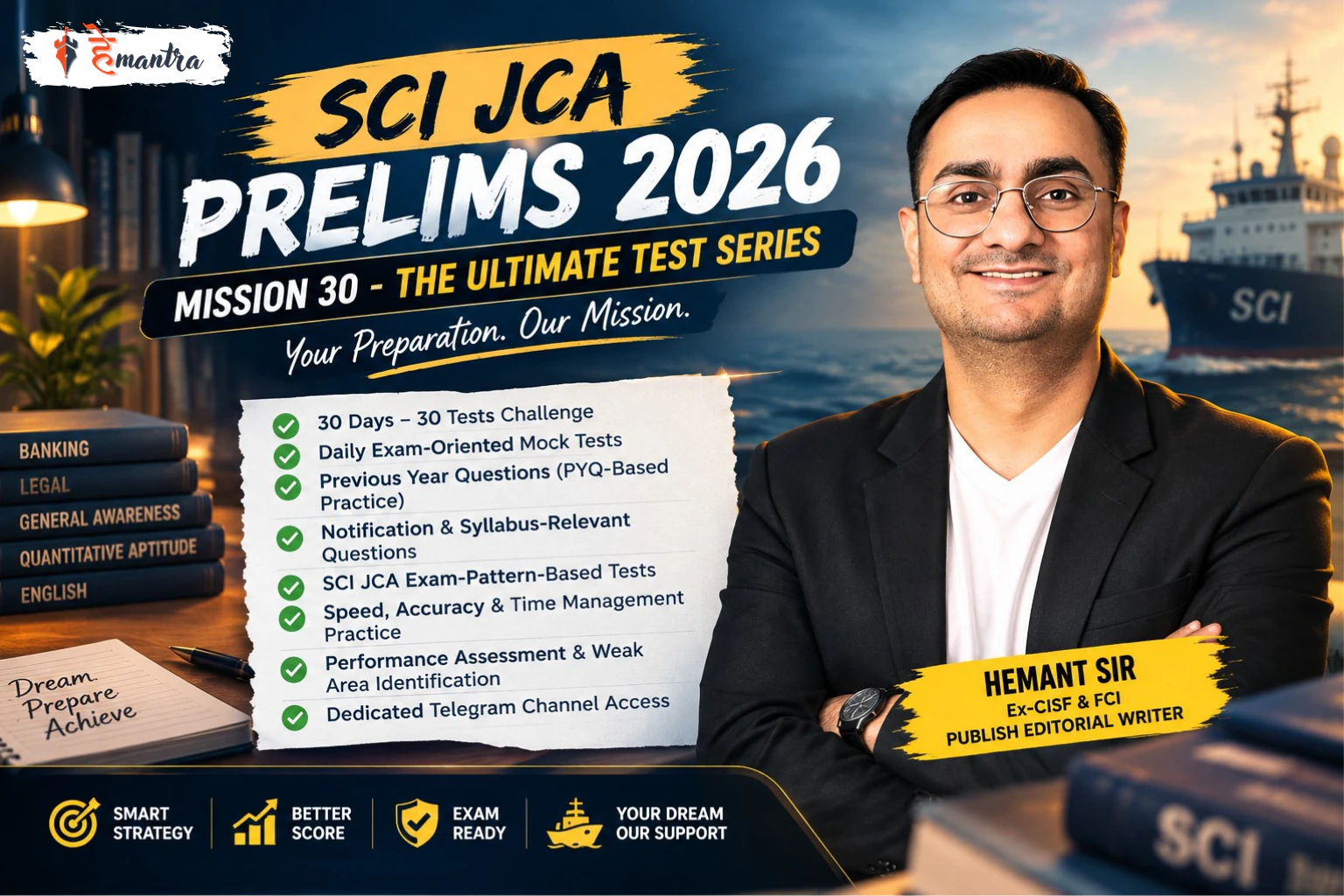
Mock Tests & PYQs
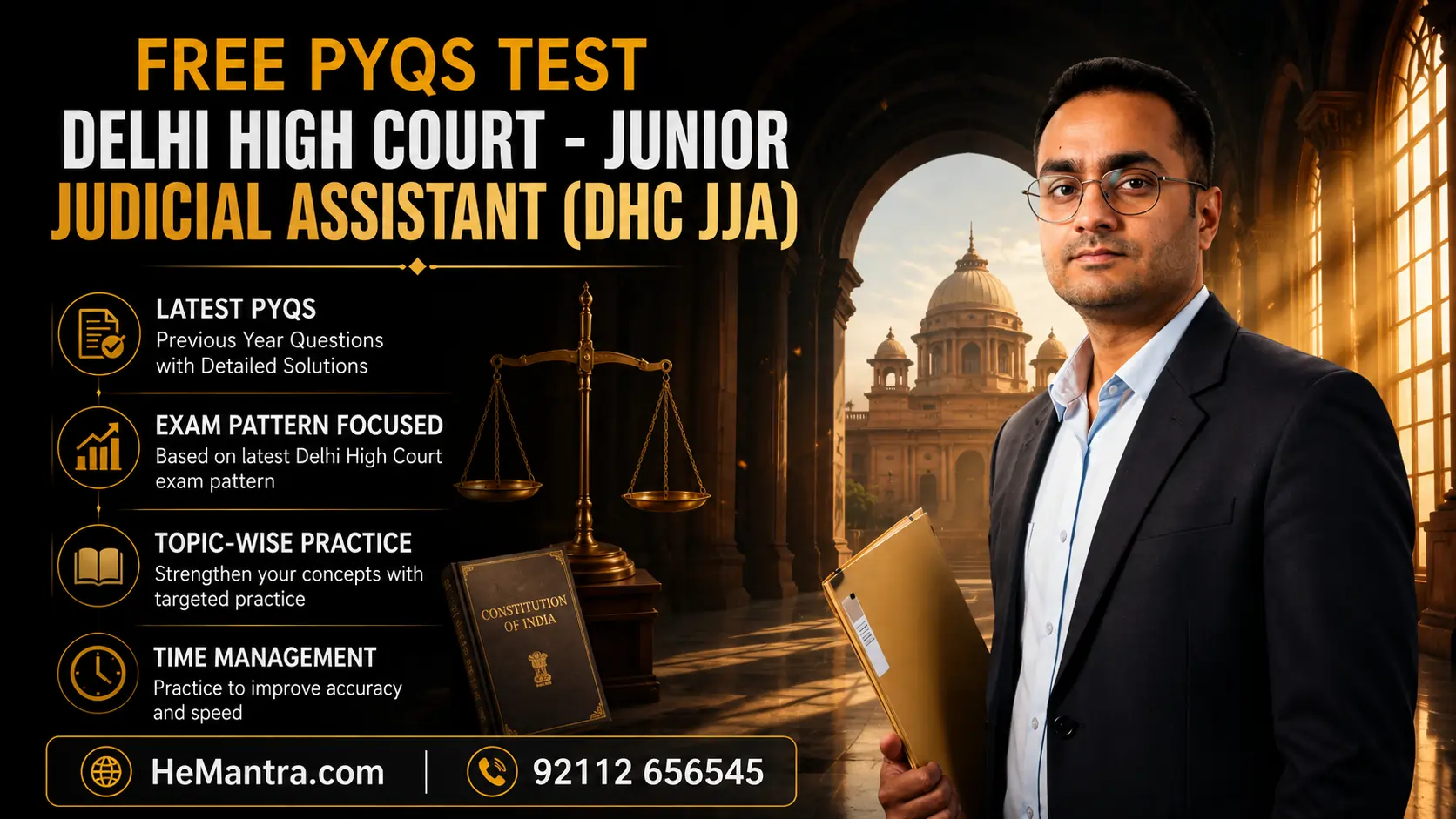
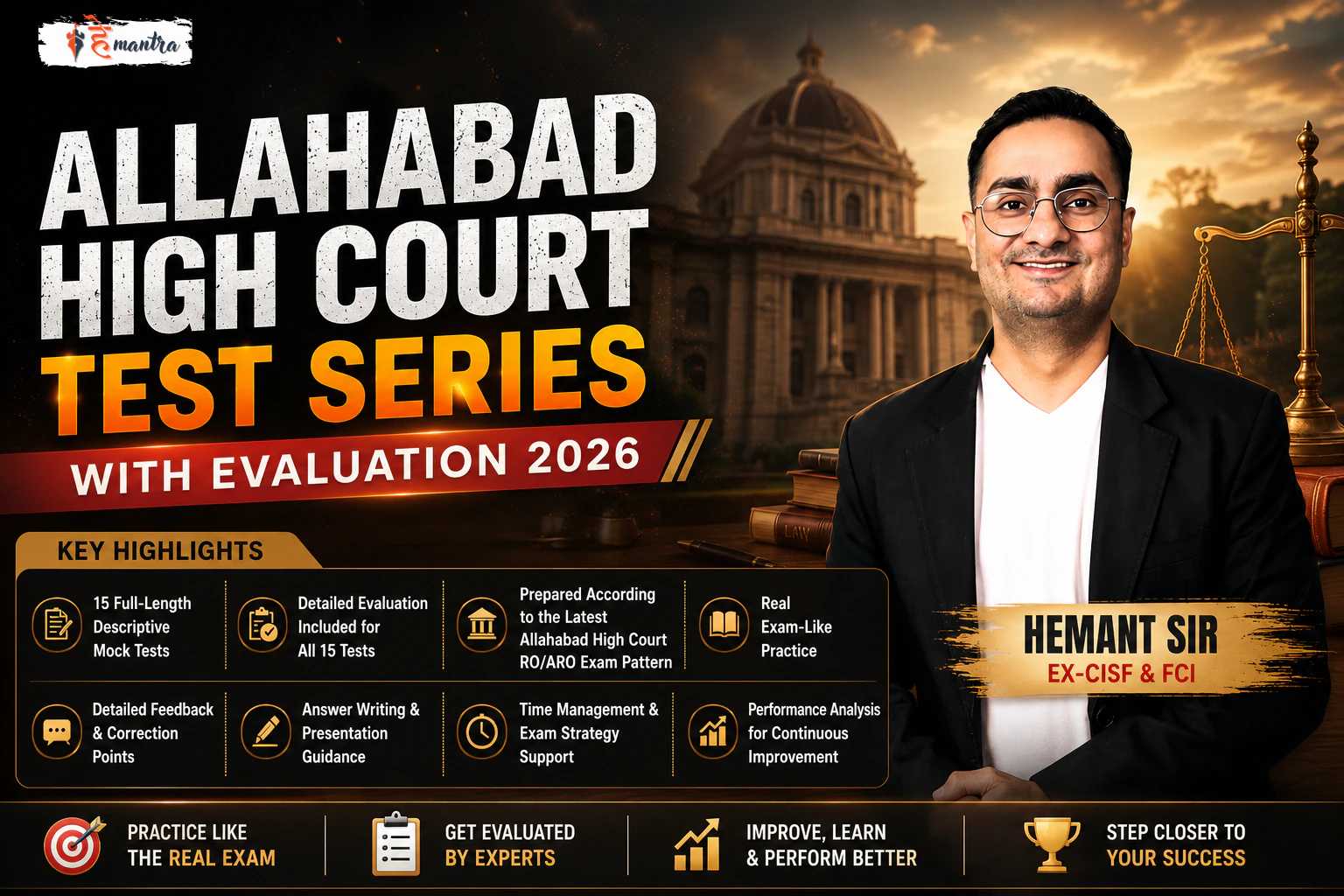
Practice with full-length mock tests and previous year question papers across Supreme Court and High Court exams to improve speed and accuracy.
Typing & Stenography Practice
Dedicated skill-test modules for Clerk, Stenographer, and Junior Court/Judicial Assistant posts across courts.
Interview Guidance
Mock interviews and personality development sessions to help you clear the final interview round confidently.
About Supreme Court & High Court Recruitment 2026


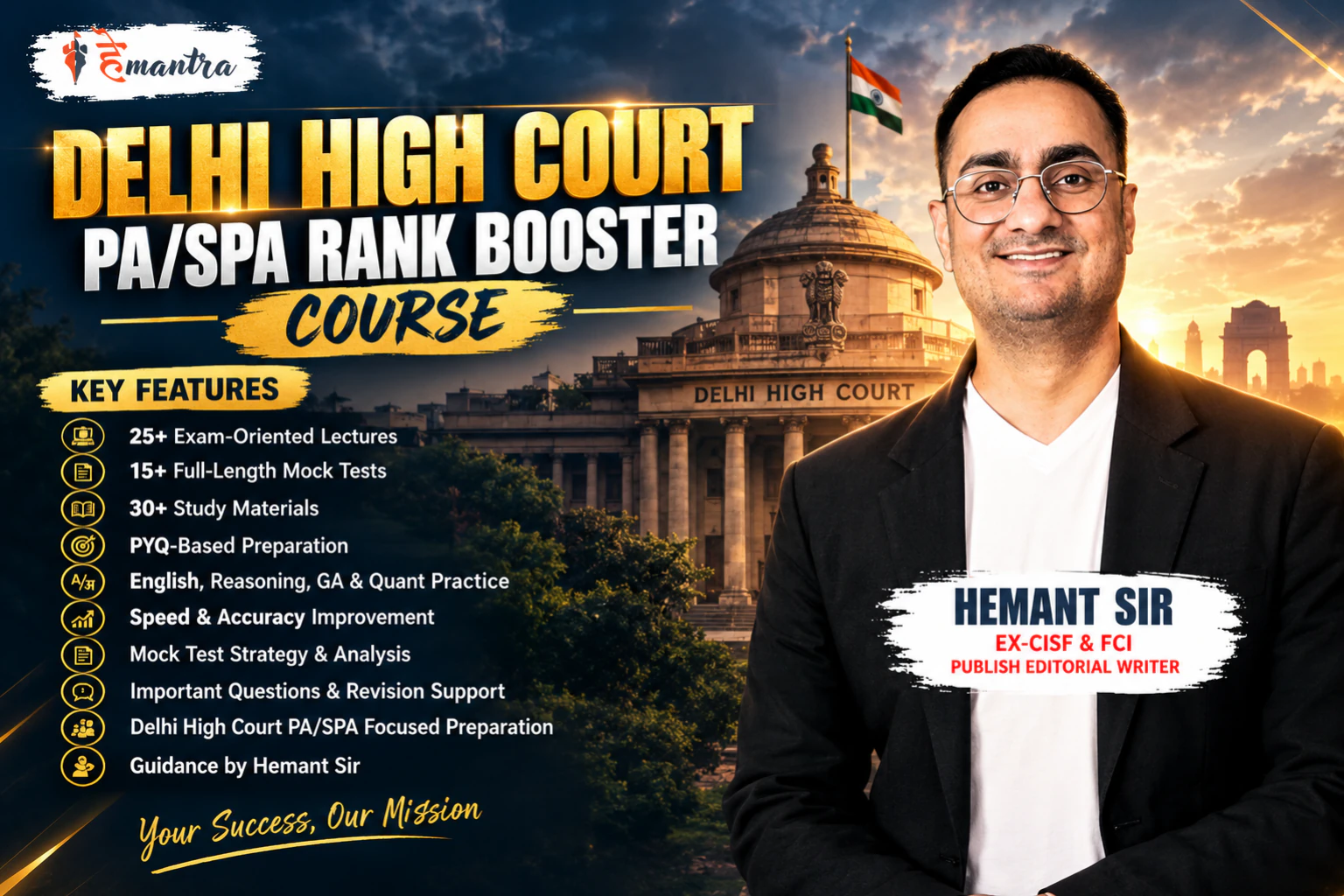
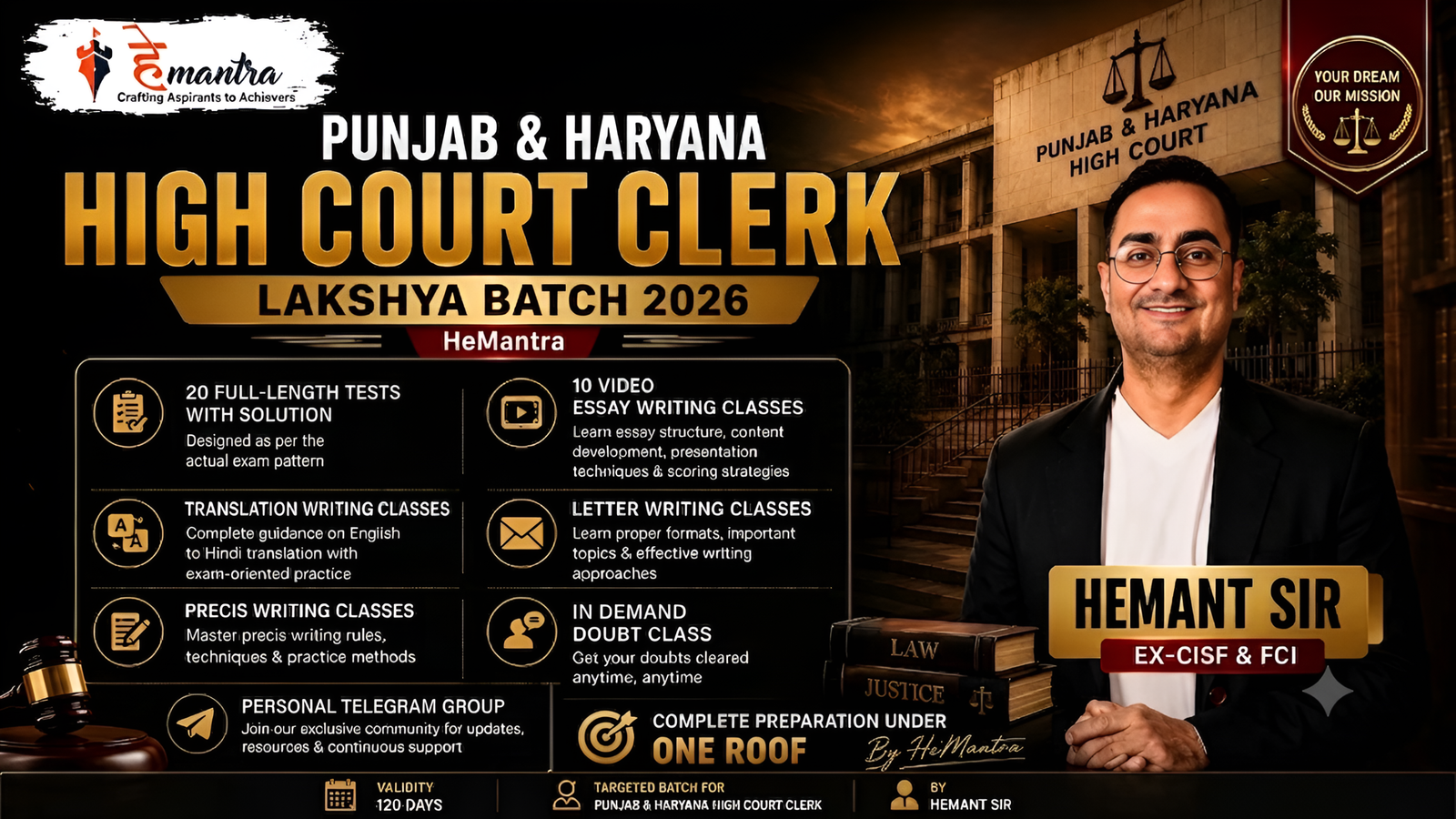
India's Supreme Court and High Courts recruit directly for ministerial and administrative posts each year, offering stable, prestigious government careers within the judicial system. Hemantra provides structured coaching for these recruitment exams across the Supreme Court of India and major High Courts, including Delhi, Allahabad, Punjab & Haryana, Patna, Orissa, Jharkhand, and Gujarat.
Common posts recruited across these courts include:
- Junior Court Assistant / Junior Judicial Assistant (JJA) — clerical and administrative roles, typically requiring a Bachelor's degree and basic typing proficiency.
- Clerk — administrative support roles across High Court registries and district establishments.
- Stenographer / Personal Assistant (PA) — requires graduation along with shorthand and typing proficiency (commonly 100 wpm shorthand, 20+ wpm transcription).
- Translator / Research Associate — specialised posts requiring language proficiency or legal research background, depending on the court.
While each court notifies its own vacancies, eligibility, and exam dates independently, the overall structure — a written test, a skill/typing test, and a document verification or interview stage — remains broadly similar across most courts.
🎯 Court Exams Overview
Each court conducts its own independent recruitment cycle. Below is a reference overview based on recent recruitment cycles; always confirm current details on the respective court's official website.
| Court | Common Post(s) | Official Website |
|---|---|---|
| Supreme Court of India | Junior Court Assistant (JCA) | Supreme Court Website |
| Delhi High Court | Clerk, Junior Judicial Assistant | Delhi High Court Website |
| Allahabad High Court | Review Officer, Clerk, Steno | Allahabad High Court Website |
| Punjab & Haryana High Court | Clerk, Stenographer | Punjab & Haryana High Court Website |
| Patna High Court | Clerk, Steno, Group C/D | Patna High Court Website |
| Orissa High Court | Junior Clerk, Stenographer | Orissa High Court Website |
| Jharkhand High Court | Clerk, Personal Assistant | Jharkhand High Court Website |
| Gujarat High Court | Clerk, Stenographer, Peon | Gujarat High Court Website |
✍️ How to Fill the Court Exam Application Form
To successfully complete the application process for any Supreme Court or High Court recruitment exam, follow these steps:
- Visit the Official Court WebsiteNavigate to the respective court's official website (e.g., main.sci.gov.in for Supreme Court, or the relevant High Court's site) to begin your application process.
- Locate the Recruitment NoticeCheck the "Recruitment" or "Notice Board" section for the specific post you wish to apply for.
- Register OnlineNew users must register with basic details — name, mobile number, and email — to receive login credentials.
- Fill Out the Application FormEnter your personal details, educational qualifications, and category information accurately.
- Upload Scanned DocumentsUpload scanned copies of your photograph, signature, and educational/category certificates in the specified format and size.
- Pay the Application FeeComplete the fee payment as applicable to your category through the available online payment methods.
- Review and SubmitCarefully review the application form before clicking the submit button.
- Print the Application FormAfter successful submission, generate a printed copy of the application form for your records.
📝 Court Exams Application Fee
Application fees vary by court and post. As a general reference (based on recent cycles):
- Unreserved/General Category: Typically ₹800 – ₹1,000/-, depending on the court and post.
- SC/ST/OBC/PwD/Ex-Servicemen: Usually discounted, commonly around ₹800/- or exempted depending on the specific court's rules.
- Payment Mode: Online payment gateway as specified by the respective court (e.g., UCO Bank gateway for Supreme Court recruitment).
- Non-Refundable: The application fee, once paid, is non-refundable in all cases.
📄 Court Exams Eligibility (Post-wise)
Eligibility varies by post and court. As a general reference:
- Junior Court Assistant / JJA / Clerk: Bachelor's Degree from a recognised university, typing speed around 35 wpm (English) is commonly required.
- Stenographer / Personal Assistant: Bachelor's Degree along with shorthand proficiency (commonly 100 wpm dictation, 20 wpm transcription) and computer proficiency (Word Processing, Spreadsheets).
- Age Limit: Commonly 18–30 years, though this varies by court (e.g., 21–30 years general for some Stenographer posts, with relaxation up to 37–42 years for reserved categories).
- Nationality: Must be a citizen of India.
- Domicile: Some High Courts require domicile/residence certificates of the relevant state or union territory.
📝 Court Exams Selection Process
The selection process varies by court and post, but generally follows this structure:
- Supreme Court JCA: Objective Written Exam → Computer Knowledge Test → Typing Test → Descriptive Test → Interview.
- High Court Clerk / JJA posts: Objective/Written Test → Typing Test → Document Verification (interview varies by court).
- Stenographer / PA posts: Shorthand/Skill Test (dictation + transcription) → Document Verification → Final Merit List.
📄 Court Exams Syllabus & Exam Pattern
Understanding the detailed syllabus and exam pattern for your target court and post is essential for effective preparation:
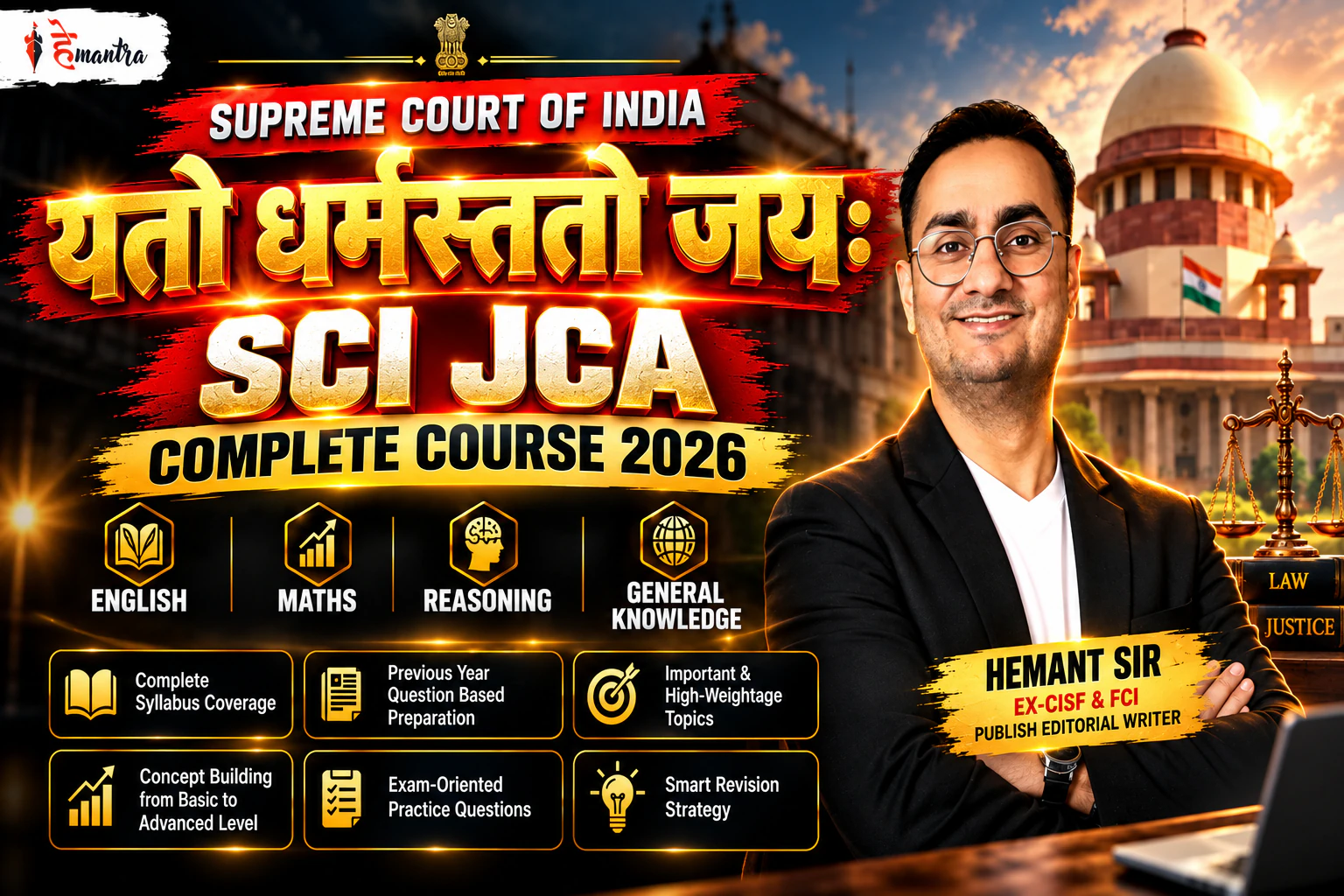
- General Knowledge: History, Polity, Geography, Current Affairs, and Judiciary-related awareness (Supreme Court, High Courts, landmark judgments).
- English Language: Sentence correction, comprehension, fill in the blanks, synonyms/antonyms, one-word substitution.
- Reasoning & Aptitude: Logical reasoning and basic quantitative aptitude, as applicable per court.
- Typing/Shorthand Skill Test: Required for Clerk, Stenographer, and PA posts — speed and accuracy both matter.
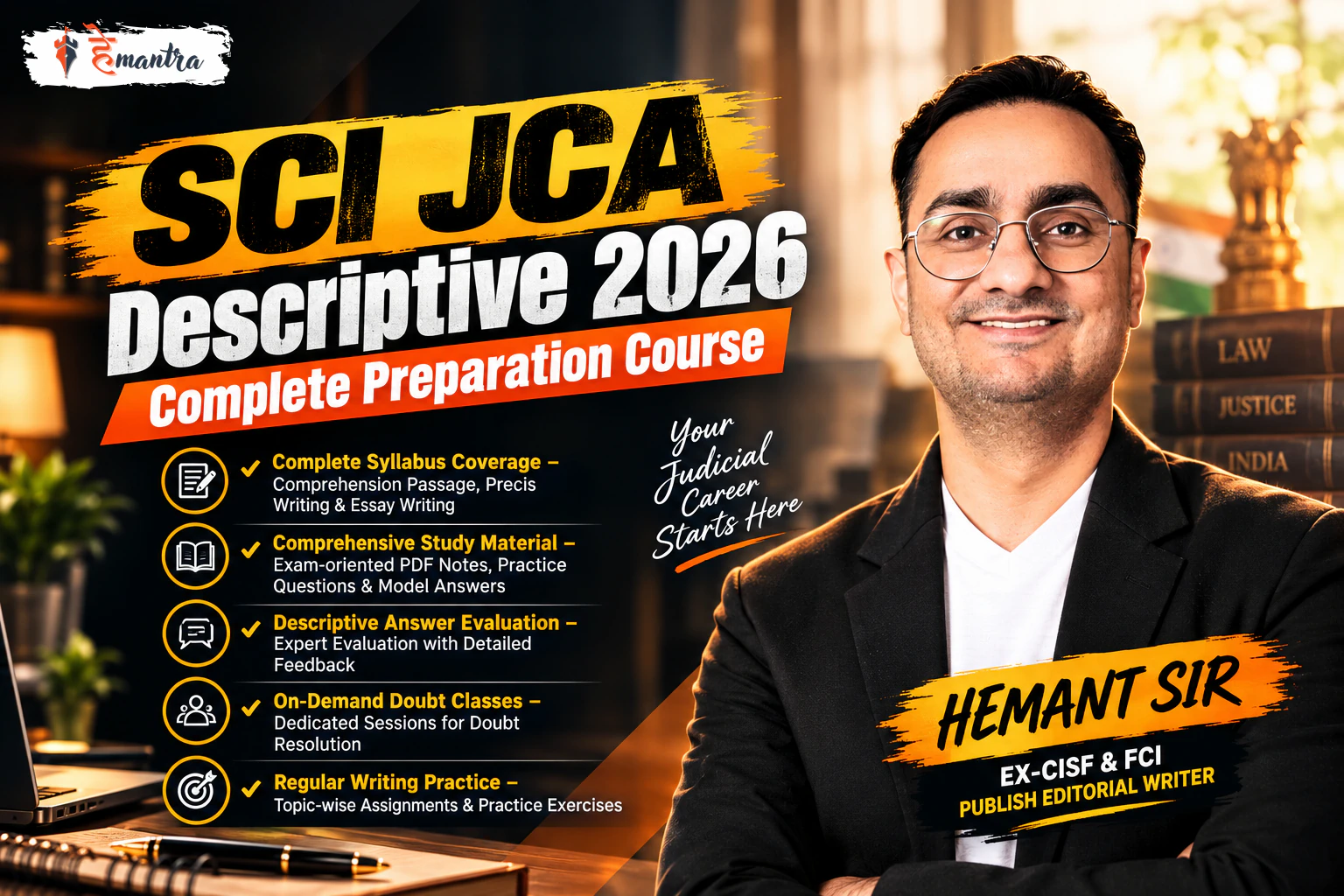
- Descriptive Paper: Essay writing and comprehension, required for higher posts like Supreme Court JCA.
| Court / Post | Written Test | Skill / Next Stage |
|---|---|---|
| Supreme Court JCA | Objective + Descriptive | Computer Test + Typing Test + Interview |
| High Court Clerk / JJA | Objective Test | Typing Test + Document Verification |
| Stenographer / PA | Shorthand Dictation | Transcription + Document Verification |
Always refer to the official notification of the specific court you are applying to, as exact patterns and marks vary.
Why Students Trust Hemantra
Frequently Asked Questions
Hemantra provides coaching for the Supreme Court of India and major High Courts including Delhi, Allahabad, Punjab & Haryana, Patna, Orissa, Jharkhand, and Gujarat High Courts.
Eligibility depends on the specific post — most Clerk/Junior Assistant posts require a Bachelor's degree, while Stenographer/PA posts additionally require shorthand and typing proficiency. Always check the official notification of the specific court.
Yes. The course starts from the basics and gradually progresses to advanced exam-level concepts.
Yes. All live sessions are recorded and available for later viewing at your own pace.
Yes. Students receive full-length mock tests, sectional tests and previous year paper discussions across multiple courts.